

Rabbi Nahman of Breslov, was born on the Shabbat of the 1st of Nissan 5532 (1772). Born Na'hman Ben Simha, he was the founder of the Breslev Hasidic dynasty.
His mother, Feyga, was the granddaughter of the Baal Shem Tov , the Rabbi and founder of Hasidic Judaism, who settled in Medzibuz in 1740, and his father, Rabbi Sim'ha, was one of his main disciples and the steward of his household. His ancestry traced back to King David through both his father and his mother!
Named after his paternal grandfather, Rabbi Na'hman Horodenker, he grew up in a Hasidic atmosphere.
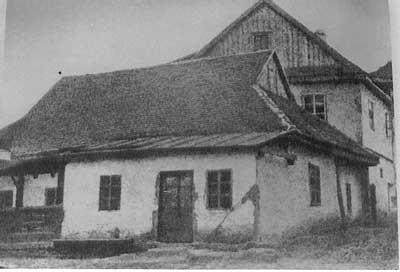
Rabbi Nahman was born during a time of great spiritual turmoil. Decrees of excommunication and anathema were issued against Hasidism by the leaders of the Vilna and Brody communities, just one week after its inception; and eight months later, the Magid of Mezrich, successor to the holy Baal Shem Tov (who himself had passed away in 1760), also passed away. At that time, more than two-thirds of the entire Jewish people lived in this part of the world…
Nevertheless, Medzibouz remained the place where the Great and Holy Disciples liked to meet, in a joy and fervor shared by all. The stories of the Tzadikim rose within these walls, imbued with the presence of the Baal Shem Tov. This is what allowed Rabbi Na'hman to reach his level, awakening him and deeply connecting him to God, guiding his first steps on the path of self-improvement from childhood.
At the age of 13, Rabbi Na'hman married, according to custom, Sachia, the daughter of Rav Ephraim of Husiatin, and acquired his first disciple, Rav Shimon (several years his senior), on the very day of his wedding. He settled with his father-in-law, then in Medvedevka, where he remained for nine years. As he approached his twentieth year, he already had many disciples. He had eight children: six girls and two boys.
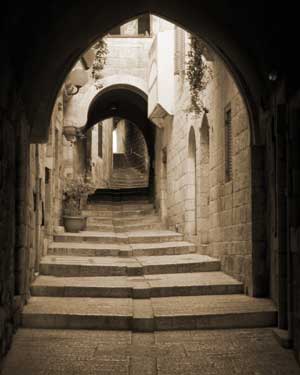 At the age of twenty-six, Rabbi Na'hman decided to go to the Land of Israel . Having left everything behind, he began the journey, accompanied by Rav Chimon, in 1798.
His ship reached the shores of Haifa on the eve of Rosh Hashanah 1799. He was received with great respect by the Hasidim of Haifa, Tzfat, and Tiberias. He left the Land of Israel around Purim 1799 and arrived in Medvedevka in the early summer of 1800. This visit marked a turning point in his teachings.
After spending two years in Zlatopol, Rabbi Na'hman settled in Breslev, Ukraine, in 1802. His wife, Sachia, died on the eve of Shavuot 1807. Rabbi Na'hman remarried the daughter of Yehezkel Trachtenbourg of Brody. He contracted tuberculosis shortly afterwards.
Following a fire that destroyed his house in 1810, Rabbi Na'hman was forced to leave Breslev. He declared: "Our faithful will forever be called by the name of the city of Breslev!" In Hebrew, BRESLEV is composed of the same letters as LEV BOSSER [a happy heart], as well as LEV BASSAR [a heart of flesh], (with a Samekh and not a Chin, as written in the Midrash). This foreshadows the ideal of the Tsaddik (Ezekiel, 36:26): "I will remove your heart of stone and give you a heart of flesh!"
He was hosted by a group of Maskilim in Ouman, also in Ukraine.
Suffering from tuberculosis for three years, it was here that Rabbi Na'hman chose to spend his last hours and prepare for his departure from this world. This place had a special significance, as it had witnessed a great sacrifice of our people: thirty thousand Jews were massacred in Uman by the Cossacks during a pogrom in 1768.
It was there that he declared: "GWALT! Don't be discouraged! Despair does not exist!"
Before he died, Rabbi Na'hman said to the disciples surrounding his bed: "What do you have to worry about... Since I am going before you, you have nothing to fear at all!"
Rabbi Nahman of Breslov passed away on the 18th of Tishri 5571 (1810). the fourth day of Sukkot. Before his departure, he had predicted:
"My flame will burn forever. It will not be extinguished! My flame will burn until the arrival of the Messiah!"
I quote Rabbi Na'hman: "My Rosh Hashanah surpasses all others. Whoever spends Rosh Hashanah at my house will have reason to rejoice all year long!"
"Not only do you, my students, depend on my Rosh Hashanah, but the whole world depends on my Rosh Hashanah."